
Renewable Energy as a Geopolitical Shield
When energy prices jump, it can sting far beyond the gas pump. For many countries, higher energy prices hit the whole economy, from trade balances to inflation and government budgets. That’s why we believe renewable energy (and in some places, nuclear power) is starting to look like more than a climate story.
In a recent look across the Loomis Sayles investible universe, we determined that 56 out of 90 sovereign issuers are net importers of energy.1 They rely on other countries for the fuel that keeps lights on and factories running. The more they import, the more exposed they are when geopolitics or supply disruptions shake global oil and gas markets.
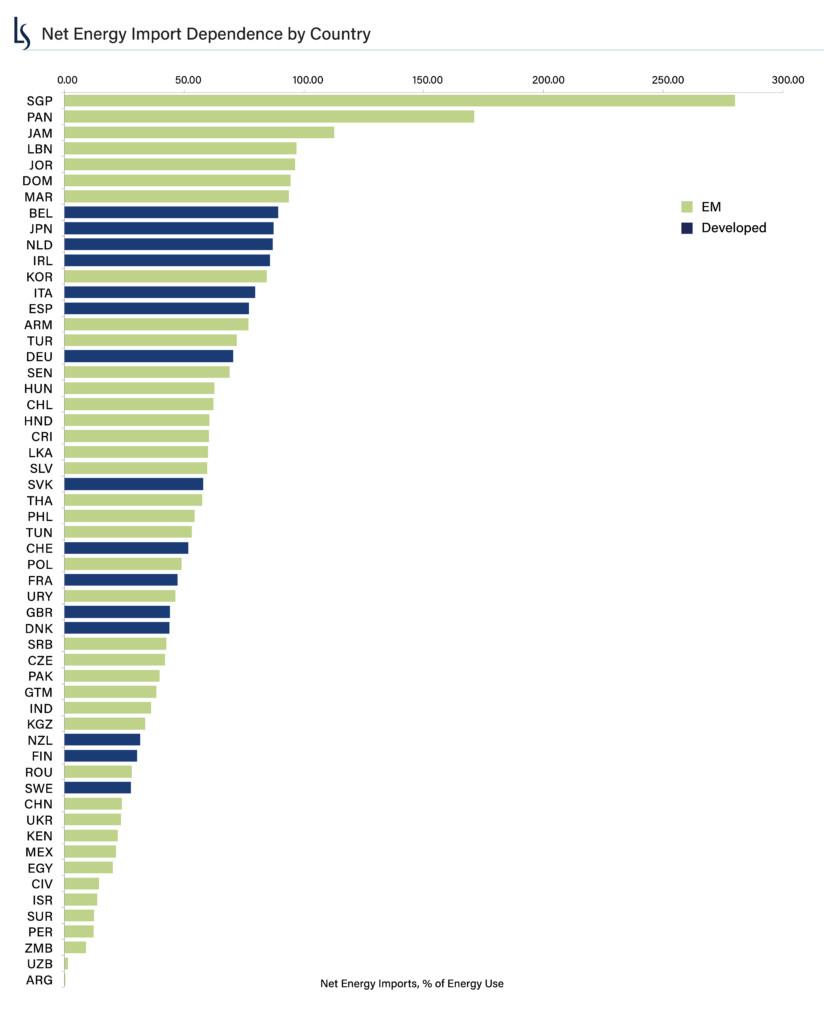
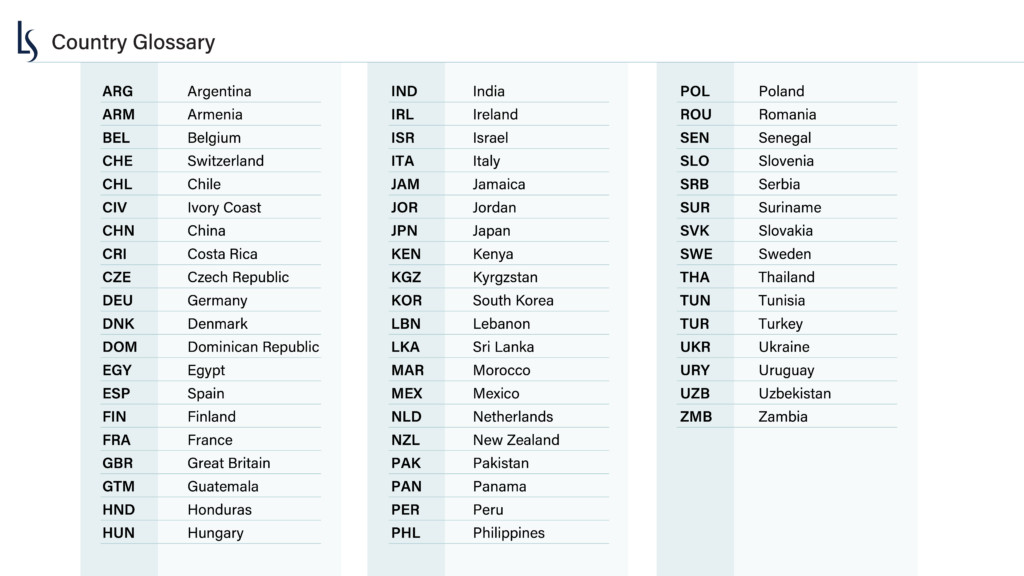
Source: World Bank, annual data as of 2023. See disclosure for Country Glossary.
Energy security
When oil or gas prices rise, import bills typically climb too. As a result, that can widen countries’ trade deficits, push up inflation and create pressure on governments to subsidize households and businesses. Over time, these strains can weaken the economic picture that investors watch, especially for countries with limited fiscal flexibility.
Renewable and nuclear energy sources can act like a shock absorber. If a larger share of a country’s energy comes from domestic sources such as solar, wind, hydro, geothermal or nuclear, it typically needs fewer imported barrels and cargoes to keep the economy moving. That doesn’t make a country immune to global energy swings, but it can soften the blow.
From our perspective, the economics of renewable energy are getting stronger. First, renewable energy has become more cost-competitive in many places. Second, solar and onshore wind can often be built faster than traditional fossil fuel projects. Third, producing power at home has reduced the logistical and geopolitical risks that come with relying on global fuel supply chains.
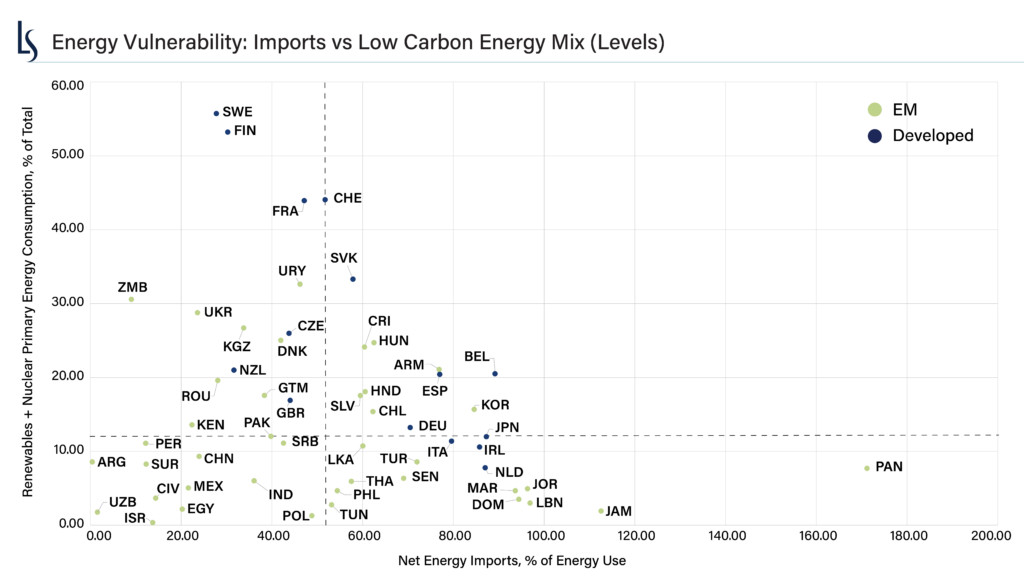
Source: World Bank, US EIA, annual data as of 2023. (Singapore was removed from the chart as an outlier for both variables. Its net energy imports as a percentage of energy use were 280% while renewable and nuclear primary energy consumption was 0.6% of the total. The top-left hand quadrant of the chart represents higher clean energy usage, lower energy imports; the bottom-right hand quadrant represents lower clean energy usage, higher imports. See disclosure for Country Glossary.
Countries positioned favorably (and why)
In this framework above, the standouts are countries that combine lower dependence on imported energy with higher (and rising) clean-energy shares. Parts of Latin America (ex-Caribbean) show up well, especially Chile, Costa Rica and Uruguay, because they already have meaningful renewable buffers. A few frontier markets are also strongly positioned. They include Kyrgyzstan and Zambia, where clean energy makes up a sizable share of primary energy use and net import reliance is relatively lower.
Europe also has many of the “right” long-term ingredients. Renewable energy has scaled quickly, and several countries get a large share of energy from renewable and nuclear sources. The catch is timing. In the near term, Europe’s reliance on imported liquefied natural gas (LNG) can still create bumps in the road if supply is tight. If energy stress persists, countries such as France and the Scandinavian nations, already sourcing over half of primary energy from renewable and nuclear sources, may feel the benefits earlier.
Pressure points
On the other end are large net importers with lower clean energy penetration, where a fuel shock can show up quickly in inflation, trade balances and government finances. Our research flags parts of the Asia-Pacific region (APAC), the Caribbean and non-Gulf Middle East and North Africa (MENA) as more exposed. The risk is higher when clean energy isn’t growing much over time, because the country stays tied to the same volatile import pattern.
If the current trends persist, we believe the largest structural improvers should be in emerging markets, where renewable deployment is growing fastest and from a low base.
How much energy does an economy need?
An often-overlooked factor is energy intensity, which measures the energy needed to produce a unit of economic output. Two countries might import the same share of energy, but the more efficient one is typically less exposed to price spikes because it simply needs less fuel to keep GDP growing. Globally, energy intensity has improved since 2019, although fast-growing emerging economies can be exceptions.
Looking ahead, progress is not guaranteed. That’s why it helps to track three things together: how much a country imports, how quickly clean energy is growing and how efficiently the economy uses energy.
Takeaway
Energy may be political, but it doesn’t have to be destabilizing. Countries that expand reliable, domestic clean energy are effectively building a buffer between their economies and the next oil or gas shock. For investors, that can matter in very concrete ways: steadier inflation, fewer fiscal firefights and potentially stronger resilience.
Endnote
1February 25, 2026. We define “Loomis Sayles investible universe” throughout this paper as all sovereign issuers whose bonds we own, or the ones that we could conceivably own through the hard- and local-currency JPMorgan EM indexes.
Important Disclosures
This blog post is provided for informational purposes only and should not be construed as investment advice. Any opinions or forecasts contained herein reflect the subjective judgments and assumptions of the authors only and do not necessarily reflect the views of Loomis, Sayles & Company, L.P. Information, including that obtained from outside sources, is believed to be correct, but Loomis Sayles cannot guarantee its accuracy. This material cannot be copied, reproduced or redistributed without authorization. This information is subject to change at any time without notice.
8911683.1.1
Author
