
Author

2026 Macro Outlook: Q&A
To kick off 2026, Loomis Sayles will feature forward-looking views on key segments of the fixed income market. Seasoned experts with knowledge and experience in each sector will answer three questions that drill into major themes for the year ahead. Keep an eye out for each installment as the series rolls out over the next few weeks.
To set the stage, we’re starting with Craig Burelle, Global Macro Strategist, Credit, and his views on the macro backdrop.
1. What do you see as the key economic growth drivers in 2026?
We believe the growth picture looks quite promising in 2026. Fiscal stimulus from the One Big Beautiful Bill Act should provide a boost to growth in the US, especially in the first quarter. Additionally, many companies have invested significant capital expenditures in artificial intelligence (AI) and data centers. We expect this spending to contribute to productivity gains and overall economic momentum globally.
Corporate health remains a key driver of growth, with strong earnings and profitability across sectors. The earnings backdrop has been robust, margins are near all-time highs and consensus forecasts for 2026 point to double-digit growth. Positive wealth effects and solid aggregate consumer consumption, especially among mid-to-upper-tier households, have also been supporting demand.
Adding it all up, we think the expansion phase of the credit cycle is likely to persist in the first half of 2026, supporting growth, investor risk appetite and solid return potential across asset classes.
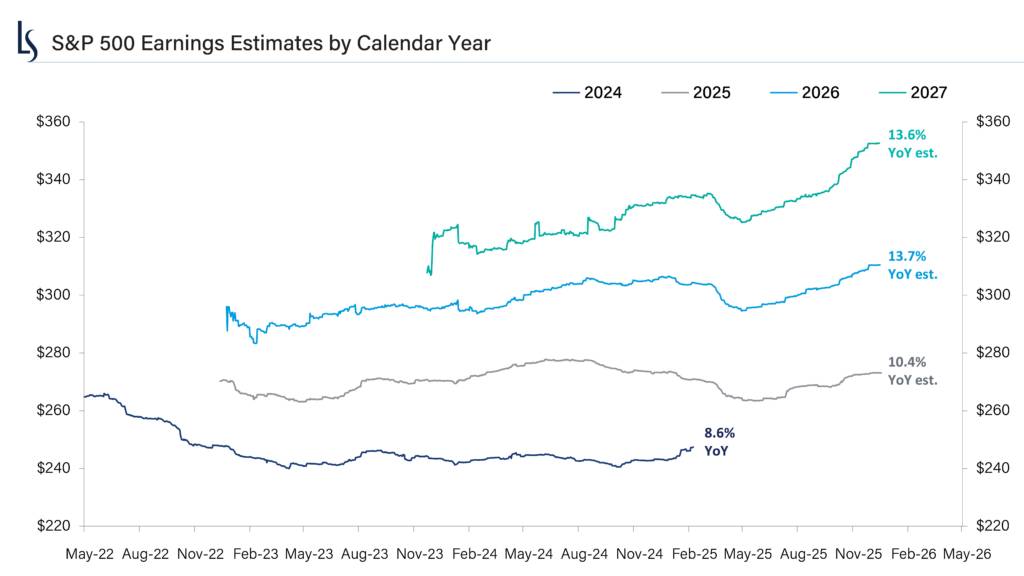
Source: Bloomberg, as of January 6, 2026.
The chart presented above is shown for illustrative purposes only. Some or all of the information shown may be dated, and, therefore, should not be the basis to purchase or sell any securities. The information is not intended to represent any actual portfolio managed by Loomis Sayles.
2. Where do you see employment and inflation heading this year, and how might the Federal Reserve (Fed) respond?
We think employment will soften somewhat. However, we don’t anticipate widespread layoffs as long as earnings and profitability remain strong. The Fed tends to be less sensitive to short-term fluctuations in employment data, focusing instead on longer-term trends and data quality. The labor market’s nonlinear behavior remains a risk, but overall, we think a modest uptick in unemployment would not derail the expansion.
We expect inflation to moderate in 2026. The impact of tariffs on inflation has been less severe than initially feared. As tariff-related effects roll off, a softening labor market and potentially slower wage growth could help the disinflationary trend resume.
The Fed’s latest communications indicate a cautious stance. We think the Fed will deliver one more rate cut in the first half of the year, but the bar for additional rate cuts will likely be higher. The Fed may rely more on productivity gains and supply-side expansion (including effects from AI and deregulation) to help manage inflation.
A major variable for 2026 is the new Fed chair. Jerome Powell’s term as chair of the Fed’s Board of Governors expires in May 2026; his successor is likely to be announced in early 2026 and confirmed within months. We’ll be watching the confirmation process closely and how the new chair might alter the direction of monetary policy.
3. Speaking of major variables, what other risks and uncertainties are you watching?
Several risks and uncertainties are on our radar this year. A key risk in our view is inflation remaining sticky if demand stays strong, which could force the market to reprice Fed expectations and potentially push rates back up. Above-average equity market valuations present the risk of a correction, which could bleed into credit markets and draw down consumer wealth.
Global risks include ongoing property market deflation and a lack of consumer confidence in China, which may dampen broader emerging market and Southeast Asian growth. In Europe, fiscal stimulus has been announced but has yet to materialize meaningfully; any delay could slow the anticipated positive turn in growth. Market structure changes—such as the rise of private credit, continued ETF innovation especially within high yield, and shifts in supply and demand dynamics across sectors—also introduce uncertainty.
Other factors we’re watching include the positive impact of AI and deregulation on supply-side dynamics, the possibility of less-dovish federal funds rate expectations if the US economy booms and ever-present geopolitical risks. We’ll be closely monitoring earnings momentum, consumer spending and global fiscal policies as we believe these factors will be critical to sustaining the current expansion.
For more on Craig’s outlook, read our January 2026 Investment Outlook.
8694767.1.1
Market conditions are extremely fluid and change frequently.
This blog post is provided for informational purposes only and should not be construed as investment advice. Any opinions or forecasts contained herein reflect the subjective judgments and assumptions of the authors only and do not necessarily reflect the views of Loomis, Sayles & Company, L.P. Information, including that obtained from outside sources, is believed to be correct, but Loomis Sayles cannot guarantee its accuracy. This material cannot be copied, reproduced or redistributed without authorization. This information is subject to change at any time without notice.
Meet the Author
