
Authors







Table of contents
- Geopolitical Risk, Volatility, and Economic Stability
- The Growth–Inflation Balance in 2026
- AI, Capital Spending, and Financial Stability
- Does AI Change the Recession Playbook?
- Who Drives US Consumption in 2026?
- Navigating Global Yield Curve Divergence
- Credit Risk: What to Watch
- Rising Risks in Private Credit
Fixed Income Unscripted: Real Talk on Market Narratives & Dynamics

The conversation around financial markets has been anything but dull lately. Investors are facing a whirlwind of geopolitical headlines, an ongoing tug-of-war between growth and inflation, changes in Federal Reserve (Fed) leadership and the rapid evolution of AI.
In this Q&A, Loomis Sayles investment professionals share their candid thoughts on the forces driving the cycle, the implications for credit and the most compelling opportunities on their radars. Their insights lend perspective to a complex environment defined by uncertainty.
Markets seemed to shrug off major geopolitical events in 2025, albeit with lots of volatility. How much do geopolitical risks, trade tensions and policy uncertainty matter for bond market and economic stability?
Lynda Schweitzer: “I think they matter a lot. It surprises me how much we haven’t seen reactions to news events that historically would have been drivers of the market. Some of it could be general bullishness on AI and wealthy consumers, and some of it could be the market looking through complexity or uncertain situations that are difficult to unpack. My bias is that this behavior won’t last forever because geopolitics, trade and policy have impacts for growth, inflation, volatility and sentiment.”
Pat Savery: “I think they do matter a lot. However, I think you have to take each one in isolation. At the beginning of 2025, markets were operating under the theory that fiscal uncertainty creates monetary policy certainty. Markets were confident that the Fed would stay on hold until they had a handle on how tariffs would affect the data. Other geopolitical shocks or wars matter, but they tend to be slower-moving and hard to price out. Often, markets treat these situations like nothing until they become “something” because they’re so difficult to handicap.”
Eric Williams: “Markets seem to care much more about policy uncertainty, as this has a direct impact on corporate behavior, mergers and acquisitions and capital expenditures. Another driving force in markets is the fiscal position of the US and the continued focus on the deficit. When you have continued fiscal spending combined with potentially more dovish monetary policy, it highlights the risk case of inflationary embers that have not yet been fully extinguished. I think this is an area that could very easily spark more widespread concern if investors become concerned that the Fed is losing its focus on containing inflation.”
Dilawer Farazi: “There was a lot going on last year. We had the continuation of the Russia-Ukraine war and conflict in the Middle East. Yet emerging markets (EM) were very resilient. Interestingly, if you look at the Middle East, the amount of supply that came out of the Middle East and the primary markets was much larger than in previous years and was digested comfortably by investors. It indicates that investors understand that EM debt can be resilient and offer compelling potential opportunities in these often-volatile situations.”
Growth and inflation took turns trading off as the lead concern last year. Will this dynamic persist in 2026, or will one become a more pressing issue?
Dawn Mangerson: “I think the growth-inflation tradeoff will persist until we get more clarity about the legality of IEEPA tariffs and the future of Fed leadership.”
Pat Savery: “I think we’re at a crossroads where either growth or inflation breaks higher. The US administration is using lower regulations to support higher productivity and growth. I’ll be watching to see if those measures are powerful enough to grow the US economy out of a higher-inflation environment. Crypto, data centers and AI could help.”
Dilawer Farazi: “Tech-driven investment makes me less concerned about growth as we head into 2026, particularly for the US, which has a lot of variables clouding the inflation outlook. If monetary policy stimulates the US economy further, the Fed may need to consider accepting a slightly higher rate of inflation than its 2% target.”
Michael Gladchun: “I think growth will be in the driver’s seat in 2026. Inflation has been fairly stable and may ease further this year. On the growth side, I see a wide range of variables that could affect GDP and the labor market. I believe any disappointment in the labor markets could potentially drive an outsize shift in policy expectations and market pricing.”
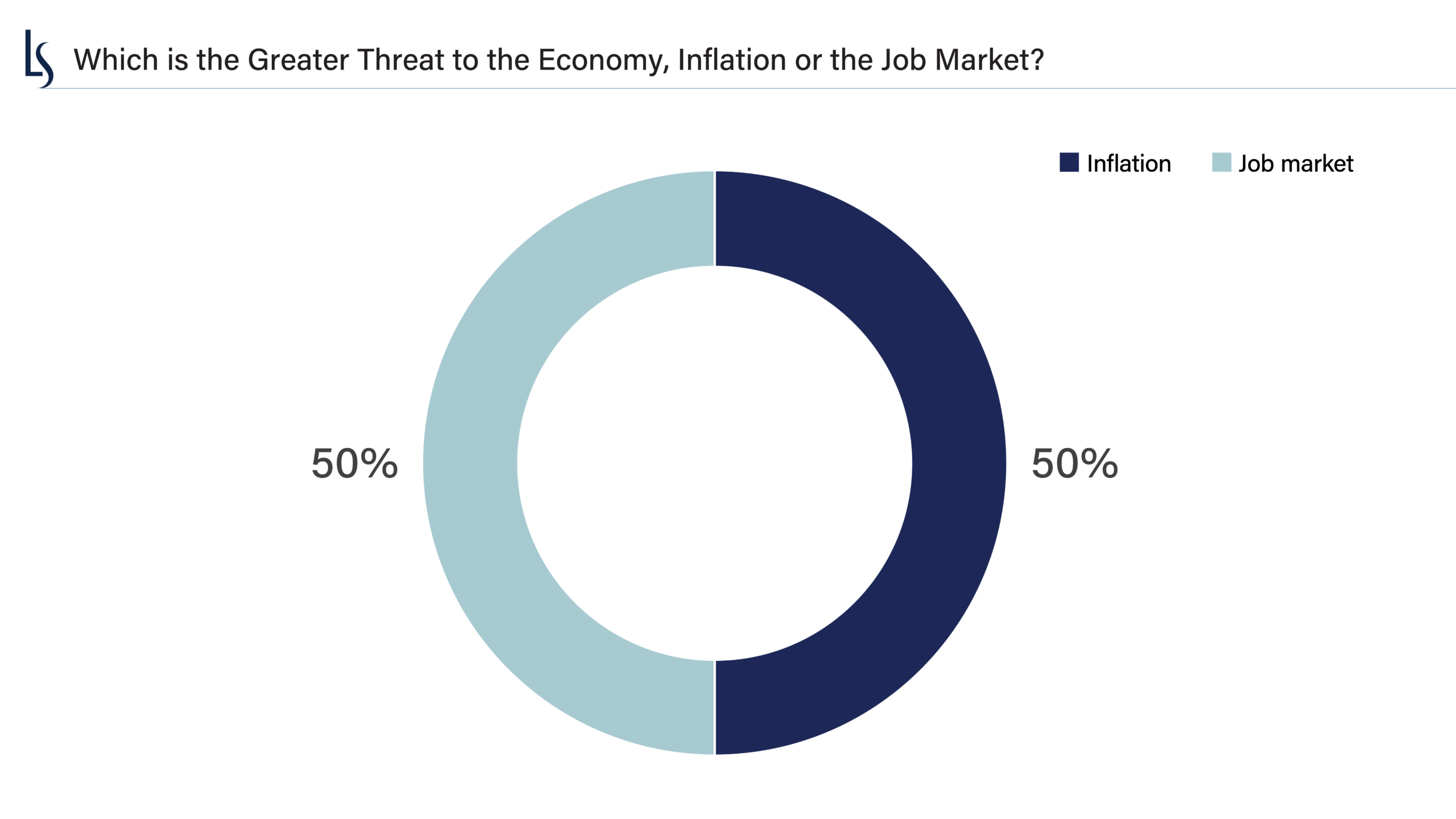
Source: Loomis Sayles survey of the featured investment professionals in this article. As of December 31, 2025.
Are you concerned about increasing leverage in the financial system as companies invest in AI and other capital expenditures?
Michael Gladchun: “Not yet. Broadly speaking, we don’t see reason for macro concern. Most of the projected incremental borrowing is expected to come from investment grade-rated companies with pristine balance sheets and impressive free cash flow, with plenty of room to borrow without putting their ratings at risk. But whenever there’s a buildup in debt, we have our antennas up and watch things closely.”
Eric Williams: “Leverage is a common concern for late cycle, but we are not particularly concerned at this point because corporates have not engaged in releveraging balance sheets. Most of the investment in AI so far has been funded through internally generated cash flows and equity issuance. We think it will be more of a risk if we see changes in corporate behavior, such as large-scale M&A with smaller equity checks than we’ve seen over the past several years.”
Andrea DiCenso: “It’s a distinct cycle because there are two different leverage stories playing out. We’re seeing leveraging in many developed markets that are in expansion/late cycle and deleveraging in EM that are in the credit repair-to-recovery phase of the cycle. Expansion/late cycle tends to be marked by increasing leverage until something breaks. So, for those economies, are we overly concerned that there’s going to be so much issuance that it could break something? No, but we’re watching new issue participation. If we start to see deals not being met with high oversubscription demand, it would raise some flags for us.”
Dawn Mangerson: “Looking at AI through a municipal lens, my biggest concern is that heavier power usage could potentially increase costs for residential customers. Electricity bills are already on the rise. AI generation could exacerbate the situation, and instead of absorbing those costs, corporations may pass them through to the consumer.”
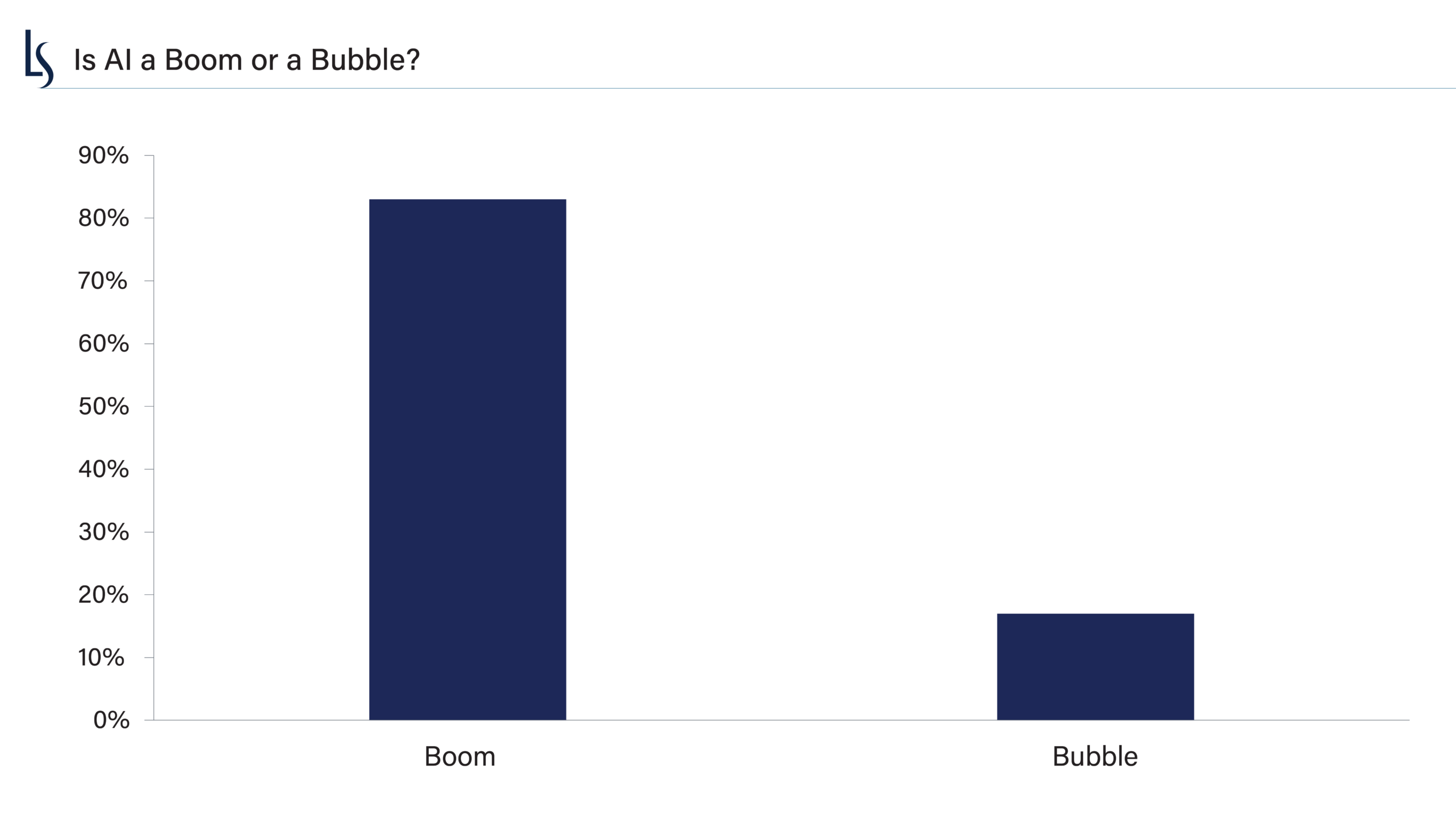
Source: Loomis Sayles survey of the featured investment professionals in this article. As of December 31, 2025.
Our macro team likes to say profits drive the cycle. Declining profits typically lead to massive layoffs and rising unemployment, ushering in a recession. If AI drives increasing unemployment while supporting profits, would you be as worried about a recession?
Andrea DiCenso: “I’m reassured by the shift in tone from the Fed. It has identified the potential impact of AI productivity on the labor market and has signaled its willingness to do what’s necessary to support growth in the US economy.”
Michael Gladchun: “I think broadly, the macro environment should be okay. That said, increasing unemployment is something I’m always concerned about in terms of forward-looking growth and recession risks. And I think the gains from this potential productivity boom are likely to be more narrowly distributed than in the past, with more displacement of workers. There’s a broad swath of the income spectrum that’s already under pressure and could be under more pressure if further slack builds in the labor market and drives income growth lower.”
Eric Williams: “We think the risk of productivity gains resulting in a dramatic increase in unemployment in the near term is quite low. A more likely outcome is corporate profit margins staying elevated, which would support economic growth, especially if the Fed continues to ease. The US labor force is very dynamic. It has shown time and time again that it can adapt to changing market and technology forces. We just don’t see mass layoffs as part of the strong profits and economic backdrop we anticipate over the next 12 months.”
Pat Savery: “Long term, I think the ability of the workforce to retrain will be paramount for supporting the economy. There will likely be pain points because retraining can’t happen overnight. For now, I think we’re looking at increased pressure on the government while this shift occurs.”
Higher-income consumers have been the main driver of consumption in the United States, while lower-income consumers have shown some weakness. Do you see this trend continuing in 2026?
Andrea DiCenso: “Sadly, I think that trend will stay intact. The high-income consumer drives growth in the US, and those consumers have very healthy savings rates and credit card balances. Meanwhile lower-income consumers have been acting in a recessionary environment since the pandemic and have not yet come out of that.”
Michael Gladchun: “In this K-shaped economy, consumption is not as durable as it would be in a more evenly distributed economy. That’s a concern for me going forward, because the stock market could correct for any number of reasons, hurting the wealth effect among higher-income consumers. A stock market correction has the potential to really slow consumption in the economy.”
Dawn Mangerson: “Unfortunately, I’m not seeing a catalyst that would change that trajectory. Recent unemployment and inflation numbers, plus policy changes in Washington, D.C., have added pressure to consumers on the lower end of the income spectrum.”
Lynda Schweitzer: “I think as long as the equity markets continue to do well, the wealth effect will continue to support consumption among wealthier consumers. One thing we’re watching is whether the pressure on lower-income consumers starts to bleed into the middle-income cohort.”
With global yield curves, interest rates and inflation diverging across regions, where do you see opportunity?
Lynda Schweitzer: “This is an exciting time for global fixed income. Yield is back and we’re seeing this divergence in cycles. I think there are some good relative value opportunities, particularly in selected EM local markets. Australia and New Zealand are also starting to look interesting from a yield standpoint. In terms of the US dollar, it’ll be interesting to see how diverging cycles and policy changes drive currency relationships. We do think that current global economic conditions support a weaker US dollar versus the rest of world. However, if US growth breaks stronger while Europe and China continue to struggle, we may see a return of strength in the US dollar.”
Dilawer Farazi: “The uncertainty around the path of US monetary policy makes EM look more compelling, in our view. It’s tricky to talk about EM as one asset class because it’s not homogenous, but in general, economic structures in EM have been improving. We’re seeing more disciplined monetary policy, larger foreign exchange reserves and more local funding, which insulates many of these countries from potential shocks and improves debt sustainability. These conditions feed into what we like to call a “golden era” for EM debt, creating a positive feedback loop that we believe will set up EM debt quite well.”
Andrea DiCenso: “Our top call for 2026 is another year of high-single-digit return potential in the EM space. Looking at these diverging spots in the credit cycle and thinking about where you can find attractive yields, some emerging economies stand out with real yields in the 5.0%-7.0% zone. Contrast that with developed market real yields in the 1.0%-2.0% range. It’s a stark difference.”
Eric Williams: “We think the US looks compelling for three reasons. One, the favorable growth backdrop, and tailwinds as a result of that. Two, monetary policy is likely to be supportive, though there’s some risk involved. Three, fiscal programs are taking effect. In combination, we believe all three factors should support US risk assets. Specifically, we believe credit markets, and those within leveraged finance (high yield bonds and bank loans), are well positioned to offer investors a variety of strong risk-adjusted return potential across a range of economic scenarios.”
Will credit risk remain low or start to reappear? What are the key things you’ll be watching?
Lynda Schweitzer: “As long as optimism and spending around AI continue and corporate profits remain strong, I think credit risk will probably be well behaved. However, sentiment may change if there’s a buildup in private credit or leverage that comes to the forefront, especially if markets become skeptical about whether AI investments will yield short-term gains.”
Dilawer Farazi: “In EM, credit fundamentals look very strong, with only a slight increase in leverage year on year. I believe strong cash flow, controlled capex and various levers for managing leverage should keep default rates low. However, investors may need to be more discerning as newer issuers without established track records come to market. I think a key thing to watch is differentiation in credit quality as the market evolves.”
Andrea DiCenso: “There are always spikes in credit risk, but we believe this year’s catalyst is likely to be developments related to the Fed, especially any changes in leadership or policy. The most important indicator for us is the steepening of the US yield curve, as it signals whether risk assets need to reprice. While we expect 2026 to be benign for credit risk, we’re closely watching the rise in leverage and payment-in-kind structures in private credit markets, which could signal increasing stress, even if the timing and extent are uncertain.”
Dawn Mangerson: “Currently, the municipal market’s credit risk is relatively stable in our view, though sectors like hospitals and higher education are more exposed to economic and policy changes. We’re watching for policy shifts, such as changes to Medicaid funding or new taxes on large educational endowments, which could add pressure but aren’t critically harmful yet. Going forward, we’ll focus on higher-quality and more diversified institutions.”
Eric Williams: “As cycle-based investors, we think the US economy is in late cycle but not heading for recession, so defaults and losses should remain in line with historical averages. Our main concern is a potential change in corporate behavior, especially if companies start stretching their balance sheets to fund capex for uncertain AI-related payoffs. Paradoxically, strong corporate profits might encourage riskier behavior, so we’re closely watching for signs of aggressive issuance or leverage.”
Michael Gladchun: “Our outlook for credit risk remains benign, with strong corporate fundamentals and solid leverage metrics showing no signs of significant organic deterioration. The increase in borrowing is mainly among higher-quality companies, so we’re not worried about credit quality for now. However, the key thing we’re watching is the macro environment, especially trends in the labor market and any signs of deterioration there.”
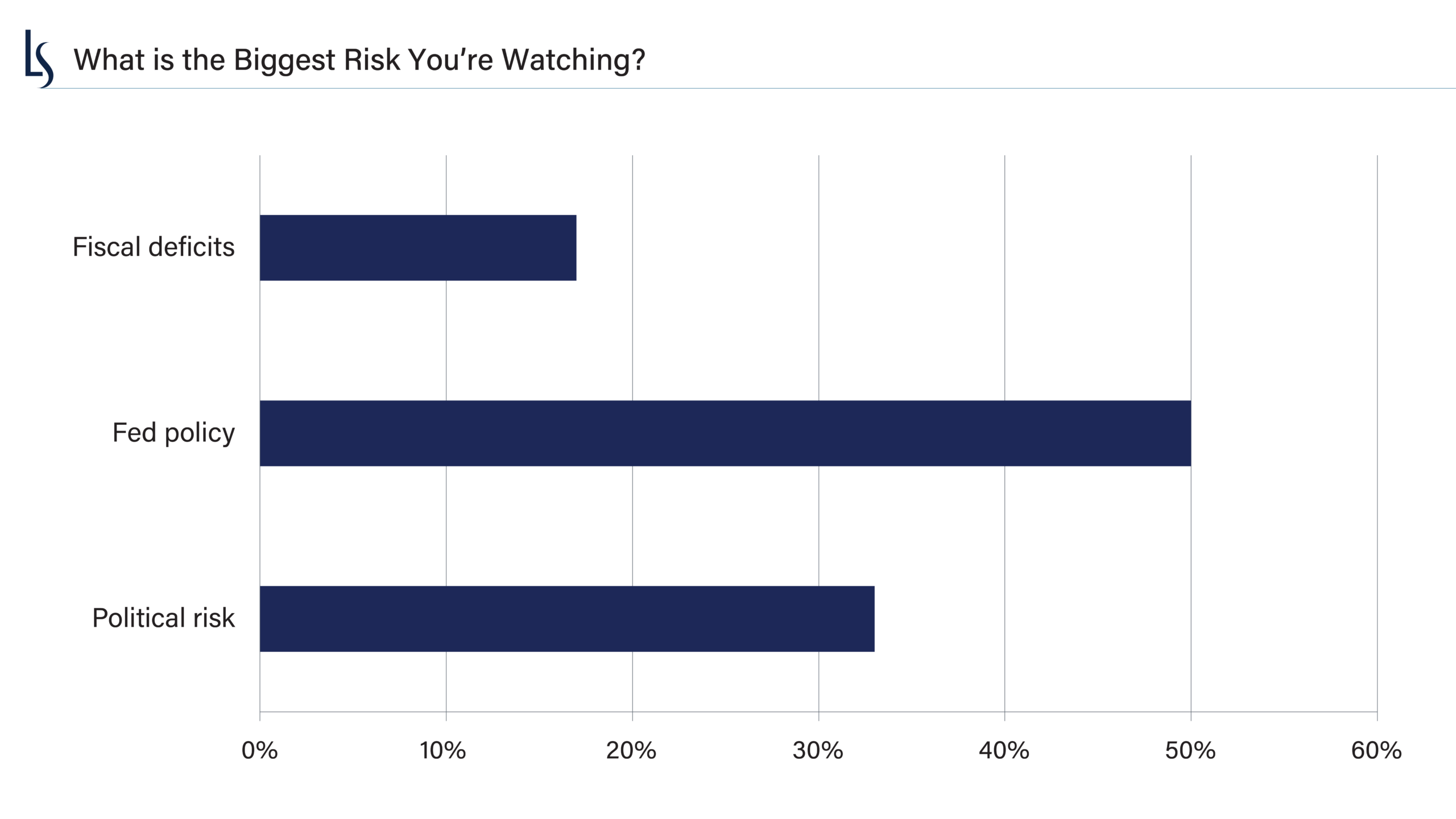
Source: Loomis Sayles survey of the featured investment professionals in this article. As of December 31, 2025.
Are you concerned about a potential bubble in private credit?
Eric Williams: “When you see headlines about private credit every day, it’s natural to worry. But in our opinion, the private markets are deep and dynamic, and there’s a lot of demand sources in the US and globally. Global private credit fundraising is not increasing at nearly the same rate that it has been over the past few years, which doesn’t point to a bubble in our view. While there have been some bad actors, it’s not a systemic issue. This highlights the need for careful, rigorous investment processes, particularly in late cycle.”
Andrea DiCenso: “We have already seen a leverage pickup in private credit markets. It’s difficult to get in-depth data on the private markets, but we know payment in kind is increasing as a share of investments. Is this more creative financing a sign of stress in that market? It’s hard to know how this will play out since we’ve never seen private credit go through a full cycle.”
Dilawer Farazi: “Private credit’s growth has been amazing, but I think the exposure could be widespread, with risks difficult to quantify. You never really know what’s happening with specific situations in private credit until someone tries to trade it, kicking off a process of testing liquidity and price discovery. If fundamentals deteriorate, the opacity and illiquidity could result in the selling of more liquid public bonds instead, moving spreads wider as an unexpected consequence.”
Lynda Schweitzer: “We’re watching private credit closely because it’s opaque and has attracted a lot of capital. I doubt every deal in that market has been a good one, but that doesn’t mean private credit is the next domino that tips things over. It’s a space with vulnerabilities like any other market, and I see it as an area to monitor.”
Disclosure
This marketing communication is provided for informational purposes only and should not be construed as investment advice. Any opinions or forecasts contained herein, reflect the subjective judgments and assumptions of the authors only, and do not necessarily reflect the views of Loomis, Sayles & Company, L.P. Investment recommendations may be inconsistent with these opinions. There is no assurance that developments will transpire as forecasted and actual results will be different. Data and analysis does not represent the actual, or expected future performance of any investment product. Information, including that obtained from outside sources, is believed to be correct, but Loomis Sayles cannot guarantee its accuracy. This information is subject to change at any time without notice.
Markets are extremely fluid and change frequently.
8754885.1.1
Authors
